
 By
By
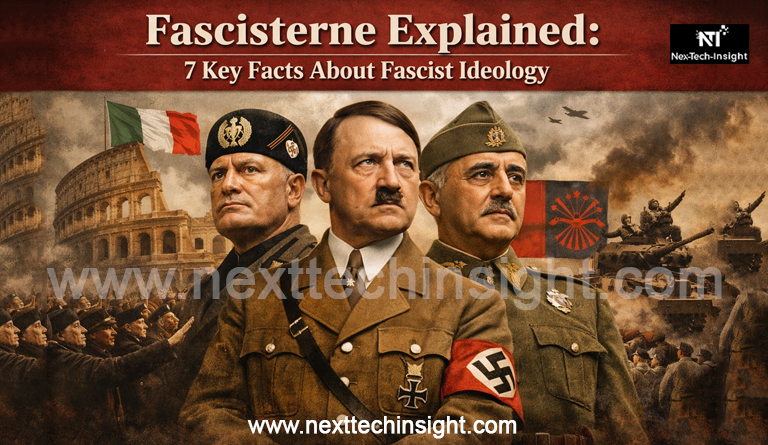
Political ideologies shape societies in ways that often linger long after their peak influence. One such ideology is fascism, a system that reshaped twentieth-century politics and still influences global discourse today. The term fascisterne refers to individuals or groups that follow fascist beliefs. While the word originated in Scandinavian languages, historians frequently use it when discussing authoritarian nationalist movements that emerged in Europe during times of crisis.
Understanding fascist ideology requires more than memorizing historical events. It involves examining social conditions, political manipulation, and human psychology. For example, during periods of economic collapse and national humiliation, citizens sometimes turn toward leaders promising unity and strength. As a result, studying these movements helps readers recognize how authoritarian ideologies, extreme nationalism, political propaganda, and state control evolve within societies.
What Does “Fascisterne” Mean?
The word fascisterne literally translates to “the fascists” in Danish and Norwegian usage. Scholars use the term to describe individuals who support fascist ideology or participate in fascist political movements. In historical research, it commonly appears when discussing authoritarian regimes, nationalist movements, political extremism, and state-centered ideology that prioritize collective identity over individual liberty.
However, the meaning goes beyond a simple translation. The term often appears in academic writing about the twentieth century. Historians analyzing European political history, radical nationalist movements, anti-democratic systems, and militarized political culture use it to explain how fascist supporters mobilized populations. Consequently, understanding this term helps readers explore the broader dynamics behind authoritarian political systems.
The Historical Origins of Fascism
Fascism developed during the turbulent years following World War I. Europe faced widespread economic collapse and deep social anxiety. Many nations struggled with inflation, unemployment, and political instability. During such uncertain times, radical ideologies gained momentum. Leaders promised national revival through strong leadership, centralized authority, and strict social discipline. Consequently, movements promoting ultranationalism, political authoritarianism, anti-liberal ideology, and state dominance began to attract followers.
Italy became the birthplace of modern fascism when Benito Mussolini formed the National Fascist Party. Mussolini promoted a vision of national unity backed by military strength and strict hierarchy. His movement rejected parliamentary democracy and embraced a totalitarian political model, corporate state structure, propaganda-driven leadership, and militarized nationalism. Soon afterward, similar ideas spread across Europe, shaping the political landscape for decades.
How Fascist Movements Emerged After World War I
World War I devastated economies and weakened governments across Europe. Millions of soldiers returned home to societies struggling with unemployment and political chaos. Under such conditions, democratic institutions often appeared weak or ineffective. As a result, charismatic leaders exploited public frustration. They promised national pride, social stability, and economic recovery. Many citizens therefore turned toward movements advocating strong leadership, national unity, political discipline, and military organization.
In Italy, Mussolini’s rise demonstrated how fascist movements used public fear to gain support. His paramilitary groups, known as the Blackshirts, intimidated political opponents while promoting nationalist propaganda. Meanwhile, similar strategies appeared elsewhere in Europe. Germany experienced rising extremist groups that eventually fueled the Nazi movement. These developments illustrate how economic crisis, political instability, propaganda networks, and mass mobilization allowed fascist ideology to spread rapidly.
The Core Beliefs Behind Fascisterne
At its core, fascist ideology revolves around the belief that the nation must dominate every aspect of society. Individual freedoms often become secondary to collective identity and national unity. Fascist thinkers argued that strong states required disciplined citizens willing to sacrifice personal interests for national goals. Therefore, movements built around ultranationalism, authoritarian leadership, military glorification, and anti-communist sentiment formed the ideological foundation.
Another important principle involves the rejection of liberal democracy. Fascist theorists believed democratic debate weakened national strength. Instead, they promoted centralized leadership under a powerful ruler. For example, Mussolini emphasized loyalty to the state above all else. Consequently, fascist ideology encouraged political conformity, state propaganda systems, controlled media narratives, and a hierarchical social order designed to maintain unity and obedience.
Key Characteristics of Fascist Governments
Fascist governments typically maintain a single ruling party controlling political institutions and public discourse. Elections either disappear or become symbolic. Leaders cultivate a powerful image as the embodiment of national destiny. Meanwhile, dissent becomes dangerous. Regimes suppress opposition through censorship and intimidation. Such systems rely heavily on state propaganda, political surveillance, media censorship, and centralized government authority.
Moreover, fascist states emphasize militarism as a tool for unity and expansion. Military values such as discipline, loyalty, and sacrifice dominate public culture. Youth organizations train citizens to embrace nationalist ideals. Cultural institutions support official narratives about national greatness. As a result, governments reinforce military nationalism, cult-of-personality leadership, state-controlled education, and mass political rallies to strengthen loyalty.
Major Leaders Associated With Fascism
Several historical figures became closely linked with fascist ideology. Benito Mussolini remains the most influential. He established the first fascist government in Italy during the 1920s. His leadership model inspired other authoritarian regimes throughout Europe. Similarly, Adolf Hitler adapted fascist principles within Nazi Germany. His regime combined extreme nationalism with racial ideology and aggressive expansionism. These leaders shaped totalitarian governance, nationalist propaganda, political indoctrination, and military expansion policies.
Spain also experienced authoritarian rule under Francisco Franco after the Spanish Civil War. Although Franco’s system differed from Mussolini’s and Hitler’s regimes, it still emphasized strict political control and nationalism. Studying these leaders reveals how fascist movements adapt to different national contexts. Their governments relied on centralized leadership, secret police systems, state ideology enforcement, and authoritarian political culture.
Quick Bio Table of Key Fascist Leaders
| Leader | Country | Rise to Power | Political System | Key Historical Impact |
| Benito Mussolini | Italy | March on Rome, 1922 | Fascist dictatorship | Created first fascist government and model |
| Adolf Hitler | Germany | 1933 election and consolidation | Nazi totalitarian regime | Led Germany during WWII |
| Francisco Franco | Spain | Spanish Civil War victory | Authoritarian nationalist state | Ruled Spain until 1975 |
How Fascist Regimes Maintained Power
Fascist regimes depended heavily on propaganda and information control. Governments shaped public opinion through newspapers, radio broadcasts, and public speeches. Messages praised national strength while demonizing political enemies. Citizens encountered constant messaging encouraging loyalty to the state. Such systems relied on mass propaganda campaigns, state-controlled media, political censorship, and nationalist symbolism to reinforce authority.
Furthermore, secret police and surveillance networks ensured compliance. Opposition leaders faced imprisonment or exile. Educational institutions promoted official ideology while discouraging independent thought. Youth organizations trained young citizens to support the regime’s goals. Consequently, governments maintained power through political repression, surveillance systems, indoctrination programs, and authoritarian law enforcement structures.
Want to learn more? Check this article: Weber Grillvorführung: What to Expect at a Live Weber BBQ Demonstration
Fascism Compared With Democracy, Communism, and Authoritarianism
Political scientists often compare fascism with other ideological systems. Democracy prioritizes individual rights and competitive elections. Citizens choose leaders through voting. Fascist systems reject this model and concentrate power within a single leader or party. Consequently, the contrast highlights differences between democratic governance, civil liberties, political pluralism, and representative institutions.
Communism also differs significantly from fascism. Although both systems restrict political opposition, communism focuses on class equality and collective ownership. Fascist ideology instead, emphasizes nationalism and a hierarchical society. Scholars analyzing these differences examine state economic control, authoritarian political models, collectivist ideology, and nationalist state identity.
| Ideology | Leadership Style | Economic System | Political Freedom |
| Democracy | Elected leaders | Mixed economy | High |
| Communism | Party leadership | State ownership | Limited |
| Fascism | Single authoritarian leader | State-controlled capitalism | Very limited |
The Spread of Fascist Movements Across Europe
During the 1920s and 1930s, fascist ideology spread across several European nations. Economic hardship and political instability created fertile ground for radical movements. Leaders promised national revival through strong governance and strict social order. Consequently, countries experienced rising support for authoritarian nationalism, political radicalization, military expansion policies, and anti-democratic rhetoric.
Germany’s Nazi movement became the most extreme example. Hitler’s regime combined fascist principles with racial ideology and territorial expansion. Meanwhile, smaller movements appeared in Eastern Europe and Latin America. Although not all achieved power, their presence demonstrated the broader influence of fascist political culture, nationalist populism, extremist propaganda, and political mobilization strategies.
The Global Consequences of Fascist Rule
Fascist governments contributed directly to one of the most destructive conflicts in human history. Expansionist ambitions and aggressive nationalism fueled the outbreak of World War II. Millions of lives were lost across Europe and Asia. Moreover, the Nazi regime’s racial ideology resulted in the Holocaust, a genocide targeting Jewish communities and other minorities. These events illustrate the dangers of extreme nationalism, authoritarian governance, racial ideology, and military aggression.
Beyond war, fascist regimes damaged democratic institutions. Free speech disappeared while political opponents faced imprisonment or exile. Cultural life also changed as governments promoted propaganda over independent creativity. Societies experienced deep divisions shaped by state censorship, political persecution, human rights violations, and ideological indoctrination.
How Fascist Ideas Influence Modern Extremism
Although classical fascist regimes collapsed after World War II, some ideological elements persist today. Certain extremist groups still promote nationalist superiority and authoritarian leadership. Modern technology has allowed these ideas to spread rapidly through online platforms. Consequently, experts studying political radicalization examine neo-fascist movements, far-right extremism, digital propaganda networks, and online radicalization communities.
However, contemporary societies also possess stronger democratic institutions. Education and historical awareness help citizens recognize early warning signs of extremism. For example, historians often reference Umberto Eco’s analysis of recurring fascist traits. These include intolerance toward minorities and hostility toward democratic debate. Studying such patterns helps communities identify political radicalization, authoritarian rhetoric, nationalist populism, and extremist ideology before they gain influence.
Common Misconceptions About Fascisterne
Many people assume fascism simply means dictatorship. In reality, it represents a broader ideological system combining nationalism, authoritarian leadership, and militarized society. While dictatorships focus mainly on centralized power, fascist regimes also attempt to reshape culture and social identity. Therefore, historians differentiate between authoritarian dictatorship, totalitarian ideology, nationalist political systems, and state propaganda culture.
Another misconception suggests fascist ideology belongs only to the past. Yet scholars warn that extremist political narratives can reappear during times of crisis. Economic downturns and social polarization sometimes create opportunities for radical movements. As a result, researchers emphasize studying political extremism, democratic instability, radical nationalism, and authoritarian movements to understand modern political risks.
Why Studying Fascism Is Still Important Today
History provides powerful lessons about the fragility of democratic institutions. When societies ignore early warning signs, authoritarian movements may gain momentum. Studying past regimes, therefore, helps citizens recognize patterns that threaten freedom. Political historians emphasize the importance of understanding democratic resilience, political accountability, civic education, and constitutional safeguards.
Moreover, examining fascist ideology encourages critical thinking about leadership and power. Citizens become more aware of how propaganda and misinformation influence public opinion. Education plays a key role in building resilient communities. By studying history, people learn to challenge authoritarian narratives, extremist propaganda, nationalist manipulation, and political intolerance before they undermine democratic values.
How Societies Can Recognize and Prevent Fascist Ideologies
Preventing extremist ideologies requires strong democratic institutions and informed citizens. Education about history and political systems helps individuals identify warning signs early. Schools and universities play an essential role by teaching critical thinking and civic responsibility. As a result, societies can strengthen democratic culture, political literacy, civic participation, and media awareness.
Furthermore, open dialogue encourages diverse perspectives within communities. When citizens engage respectfully with differing opinions, extremist narratives lose influence. Governments must also protect freedom of speech and minority rights. These measures help safeguard societies from authoritarian politics, political discrimination, nationalist extremism, and anti-democratic ideology.
Will you check this article: Ann Archambault: 8 Key Milestones in Her Life,
Frequently Asked Questions About Fascisterne
- What does fascisterne mean?
Fascisterne refers to followers of fascist ideology, supporting authoritarian rule, extreme nationalism, and strong centralized state power. - Where did fascism originate?
Fascism began in Italy under Benito Mussolini, rising after World War I amid political instability, economic crisis, and nationalist movements. - Who were the most famous fascist leaders?
Key leaders included Benito Mussolini, Adolf Hitler, and Francisco Franco, known for ruling authoritarian regimes and promoting nationalist ideology. - How did fascism contribute to World War II?
Fascist expansionism, militarism, and aggressive nationalism from regimes like Nazi Germany pushed Europe toward the conflict of World War II. - Are fascist ideas still present today?
Some far-right extremist groups echo fascist themes like ultranationalism, yet modern democracies actively counter authoritarian movements.
Final Thoughts
Understanding fascism remains essential for protecting modern democratic societies. History demonstrates how quickly economic instability and political fear can empower authoritarian movements. Studying these events reveals patterns that often repeat across generations. When citizens recognize authoritarian propaganda, extreme nationalism, political radicalization, and anti-democratic rhetoric, they become better equipped to defend democratic institutions.
Moreover, awareness encourages responsible civic participation. Democracy thrives when citizens stay informed and challenge harmful narratives. Education therefore, remains one of the strongest defenses against extremist ideology. By examining the history of fascist movements and their global consequences, societies can build resilience against authoritarian politics, ideological extremism, propaganda manipulation, and political intolerance. Learning from the past ensures future generations preserve freedom and democratic values.
Don’t miss out on any news—keep in touch for real-time information, visit Next Tech Insight!